
In part one of this series, we looked at what actually drives a freight factoring company's value. Concentration kept coming up as one of the biggest levers a buyer weighs. This installment goes deep on that single driver: what concentration risk is, how to measure it, and what to actually do about it.
To reduce concentration risk in a factoring portfolio, cap how much of your receivables ledger any single debtor can represent, measure that exposure continuously, and structure advances and reserves around it. Regulators treat a single account above 10% of the portfolio as concentrated, and commonly cap concentrated accounts at 10 to 20% of the borrowing base.
Search this question and you'll get advice about diversifying a stock portfolio. That's the wrong answer. In factoring, concentration risk means something specific and operational: too much of the money you're owed depends on one broker or shipper paying. This is written for the operator managing that book, the person who feels it when a single debtor goes slow.

What concentration risk actually is in a factoring book
Concentration risk is single-party exposure. When one debtor, the broker or shipper who ultimately pays the invoice, accounts for an outsized share of your outstanding receivables, that one relationship can move your whole portfolio. If they slow-pay, dispute, or fail, the loss isn't a rounding error. It's a hole in the book.
The OCC's Accounts Receivable and Inventory Financing handbook calls this "single-party" risk and sets a clear marker: lenders normally consider receivables concentrated once a single account reaches 10% or more of the total portfolio, and those extending credit to a concentrated customer base should cap concentrated accounts at 10 to 20% of the receivables borrowing base (OCC).
Freight amplifies this. Two forces push a factoring book toward concentration almost automatically: a handful of large brokers move a disproportionate share of loads, and a growing factor is tempted to lean into whichever debtor is paying reliably right now. Both feel like good business until that debtor is the one that stalls.
Step 1: Measure it before you manage it
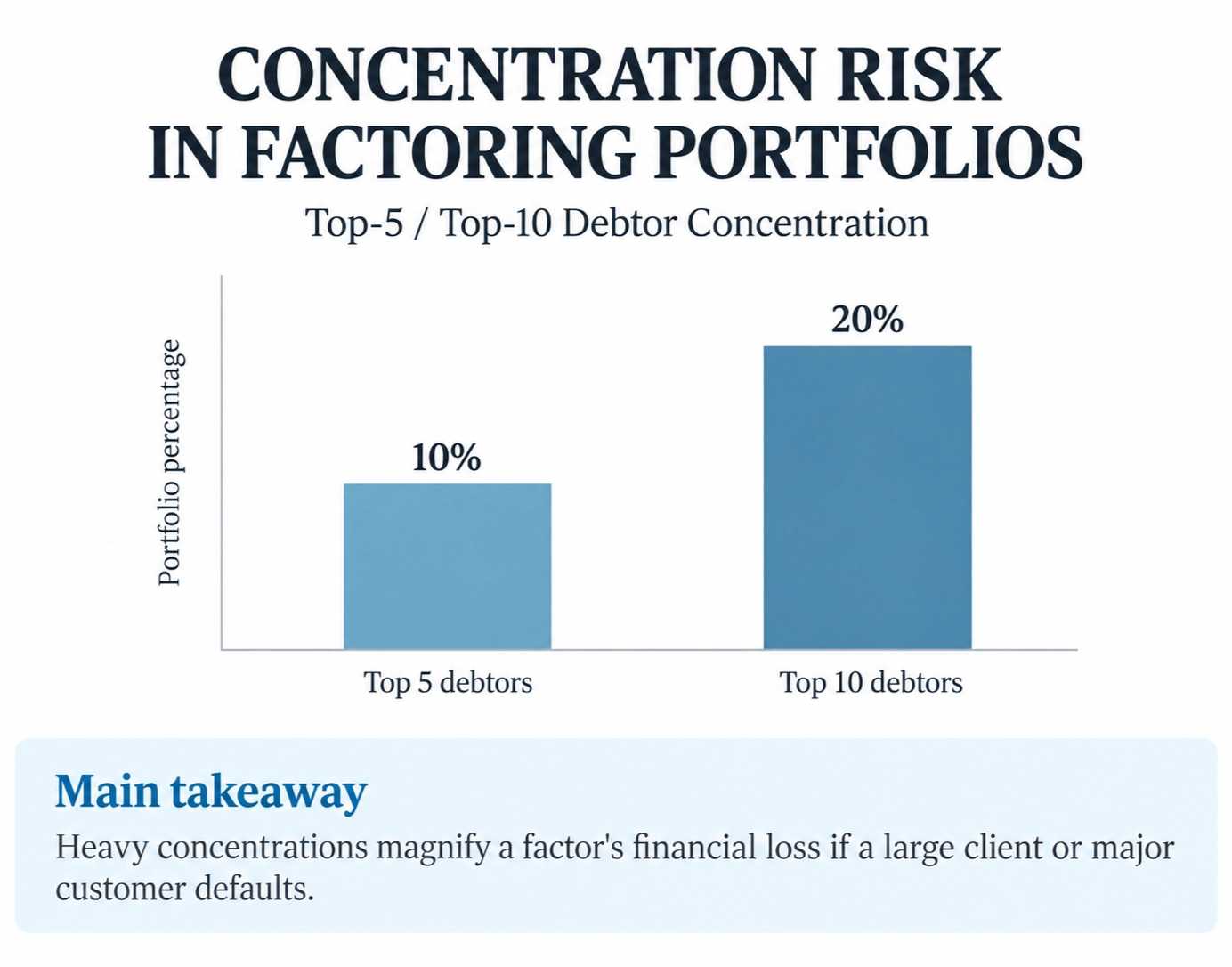
You can't reduce an exposure you don't track. The International Factoring Association lists client concentration ratios among the five metrics every factoring company should watch monthly, alongside portfolio yield, bad-debt and reserve adequacy, days outstanding, and funding capacity. The IFA recommends tracking top-5 and top-10 client concentrations, noting that heavy concentrations magnify financial loss if a major customer defaults (IFA Commercial Factor).
For a factoring operation, measure concentration two ways, because your risk sits on both sides of the invoice:
- Debtor concentration. The share of your open receivables owed by each broker or shipper. This is the exposure that actually pays you, so it's the one that matters most.
- Client (carrier) concentration. The share of funded volume from each carrier client. A single client leaving hurts revenue. A single debtor defaulting hurts capital.
Track each debtor's percentage of the ledger, your top-5 and top-10 concentrations, and how those move month over month. A number that's creeping up is a decision you haven't made yet.

Step 2: Set a concentration limit and write it into policy
A debtor concentration limit is the maximum share of your receivables you'll allow to ride on one debtor. Resolve frames it as the mechanism that controls how much credit risk a business takes on with any single customer: with $100,000 in receivables and a 20% limit, no single customer should owe more than $20,000 (Resolve).
Where operators actually set the line varies, and it should be treated as a range, not a rule:
- The OCC frames 10% as the point an account becomes concentrated and 10 to 20% of the borrowing base as the ceiling for concentrated accounts (OCC handbook).
- Broader receivables-finance practice runs wider: many lenders want any one customer under 20 to 25%, will stretch to 30 to 35% for a known, strong-credit debtor, and some specialty lenders will fund highly concentrated books when the debtor's credit justifies it (Finley, Commercial Funding Inc.).
The right number depends on the credit strength of the debtor, how diversified the rest of your book is, and how much capital you can afford to have exposed. The discipline that matters isn't the exact percentage. It's picking a limit deliberately, writing it into your credit policy, and holding to it when a big, easy debtor tempts you past it. Setting a limit doesn't guarantee you avoid a loss. It bounds how large any one loss can be.

Step 3: Use structural levers to bring exposure down
Once a debtor is over your limit, you have tools to contain the exposure without walking away from good volume:
- Cap what you advance against. Treat receivables above the limit as ineligible for advance, the same mechanism ABL lenders use. You can keep servicing the invoice while refusing to carry the incremental risk.
- Watch for cross-aging. When a share of a debtor's receivables goes past due, a lender may deem that debtor's entire balance ineligible. A concentrated debtor that starts aging can knock out far more of your borrowing base than the past-due amount alone.
- Diversify the debtor base deliberately. Onboard carriers whose loads run through different brokers, and treat debtor diversity as an onboarding criterion.
- Right-size reserves. A larger holdback on an over-limit account absorbs more of the downside if it slips.
- Tighten verification on the big ones. Concentration and monitoring intensity should move together.
None of this is exotic. It's the day-to-day credit discipline that separates a book that survives a bad debtor from one that gets hurt by one.
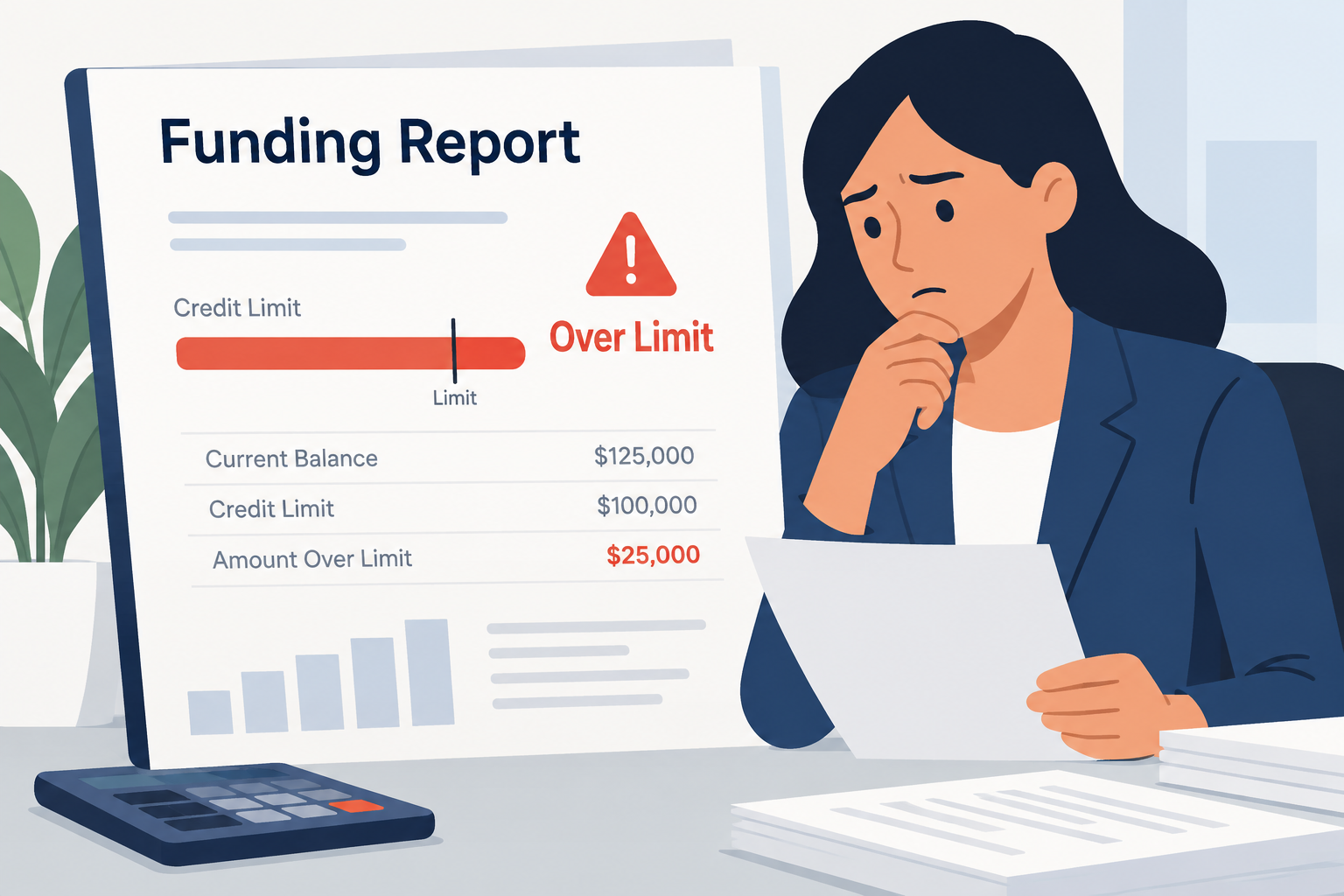
Once a debtor is over your limit, you have operational tools to contain the exposure without necessarily walking away from good volume.
- Cap what you advance against, not just what you fund. Treat receivables above the limit as ineligible for advance, the same mechanism asset-based lenders use. The OCC handbook describes lenders adjusting advance rates by customer quality and designating over-limit or stale receivables as ineligible collateral. You can keep servicing the invoice while refusing to carry the incremental risk.
- Watch for cross-aging. The OCC notes that when a share of a debtor's receivables goes past due, a lender may deem that debtor's entire balance ineligible. A concentrated debtor that starts aging can knock out far more of your borrowing base than the past-due amount alone. Build that domino into how you monitor your largest accounts.
- Diversify the debtor base deliberately. The durable fix is more paying debtors, not a bigger reserve. Onboard carriers whose loads run through different brokers, and treat debtor diversity as an onboarding criterion, not an afterthought.
- Right-size reserves for the concentration you're carrying. If a debtor is temporarily above your comfort line, a larger holdback on that account absorbs more of the downside if it slips.
- Tighten verification cadence on the big ones. Your largest debtors deserve the most frequent invoice verification and payment-trend review. Concentration and monitoring intensity should move together.
None of this is exotic. It's the day-to-day credit discipline that separates a book that survives a bad debtor from one that gets hurt by one.

The part generic guides skip
Concentration risk isn't a spreadsheet problem you solve once. It drifts quietly, in the direction of whichever debtor is easiest to grow with. Knowing which broker's 22% is fine because their credit is bulletproof and their pay history is clean, and which broker's 12% is a warning light because their days-to-pay have started stretching, that judgment is what turns a stated limit into an actual defense.
That judgment call is exactly what separates concentration risk from the value question we opened this series with in part one. A book that manages this well isn't just protected from a single bad debtor. It's a more valuable book on the day you decide to sell it, if that day ever comes.

FAQ
What is concentration risk in factoring? It's single-party exposure, the risk that too much of your outstanding receivables depends on one debtor (broker or shipper) paying. If that debtor slow-pays, disputes, or defaults, a concentrated book takes an outsized hit. It's a receivables-portfolio question, not a stock-portfolio one.
What is a good debtor concentration limit for a factoring portfolio? There's no single right number. The OCC treats accounts above 10% of the portfolio as concentrated and suggests capping concentrated accounts at 10 to 20% of the borrowing base. Broader receivables-finance practice often runs 20 to 35% for strong-credit debtors. Set yours by debtor credit strength, overall diversification, and the capital you can afford to expose.
How do factors measure concentration risk? Track each debtor's share of open receivables, your top-5 and top-10 concentrations, and how they move month over month. The IFA lists client concentration ratios among the five metrics to watch monthly. Measure both debtor concentration (who pays you) and client/carrier concentration (who sends you volume).
Can I reduce concentration risk without turning away volume? Often, yes. Treat receivables above your limit as ineligible for advance, increase the holdback on an over-limit debtor, verify large debtors more frequently, and prioritize onboarding carriers whose loads run through different brokers. These contain exposure while keeping the relationship.
Does setting a concentration limit guarantee I won't take a loss? No. A limit bounds how large any single loss can be and forces the risk to be a decision rather than an accident, but it doesn't eliminate credit risk. Sound underwriting, verification, and collections still do the rest.

FRC's founder, Renee Williams, built a freight factoring company from the ground up across 25+ years, managing large invoice portfolios and leading credit and underwriting operations at scale. Concentration monitoring sits inside FRC's Risk Advisory work and the 90-Day Operational Audit, which reviews collections, onboarding, risk, technology, staffing, and financial reporting, and delivers a written assessment with a prioritized 12-month roadmap.
We don't promise a number. We help you build the policy, the metrics, and the discipline that keep one debtor from defining your portfolio.