You’ve built a transportation factoring operation. Revenue is growing. Portfolio is solid. But you’re still the de facto COO.
Collections cadence? You own it. New client onboarding? You approve it. Tech stack integration issues? You’re debugging it. UCC filings slipping through the cracks? You’re catching them at 11 PM.
This isn’t sustainable. And it’s costing you more than you realize.

Here’s what I see in this space:
The math is broken. A full-time COO runs $180K-$220K in salary + benefits + recruiting. But a $30M portfolio doesn’t generate the margin to justify that overhead—at least not without trimming somewhere else. So the owner stays in operations, growth stalls, and margins compress because the operational infrastructure isn’t scaling with the book.
The generalist problem is real. Hire a traditional COO and you’re paying for 6 months of freight factoring education. They don’t know the difference between a strong collections cadence and a sloppy one. They don’t understand concentration risk the way someone who’s lived it does. They’ll build playbooks that look good but don’t fit how factoring actually works.

Vendor relationships take years to build. Most factoring companies approach software vendors from a position of zero leverage. You get standard pricing, standard implementation, standard timelines. But your operation isn’t standard. The best TMS setup for a $10M portfolio looks nothing like the best setup for a $40M portfolio. Yet most operators discover this after implementation.
Compliance gaps compound. UCC filings, NOA management, reserve adequacy, contract enforceability—these aren’t things that get better with time. They get worse. One lapse, one missed notice, one unclear contract term with a difficult client, and the cost of that mistake is 10x what it would have been to get it right upfront.

So what actually works?
The companies winning in this space right now are doing one of three things:
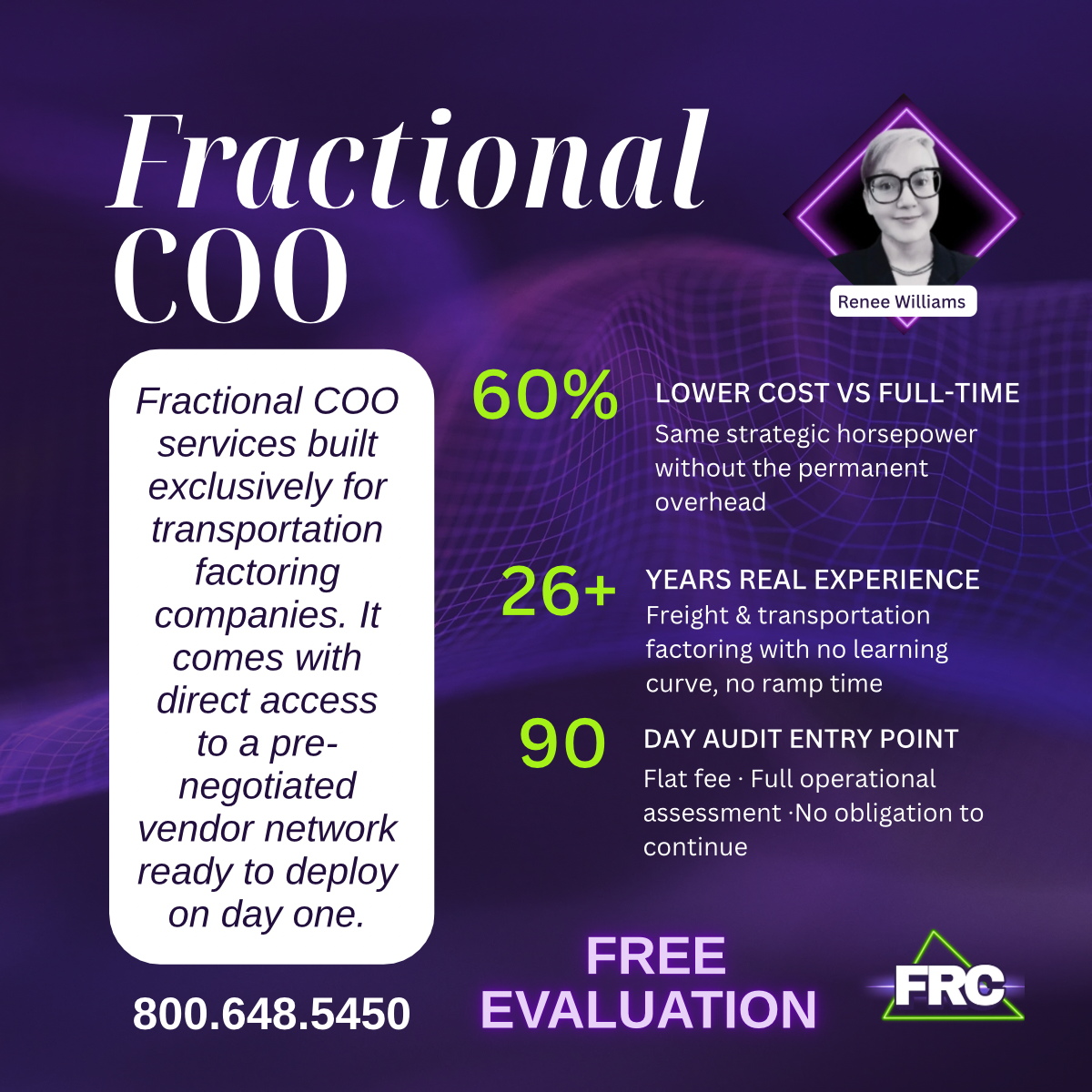
- They brought in a fractional COO early. Not a consultant. Not a board advisor. Someone embedded, 10-15 hours a week, who owns execution—not just recommendations. Someone who’s already deep in freight factoring. These companies are moving faster and cleaner.
- They automated their way out of the problem. Collections workflows, onboarding processes, AR aging triggers, UCC tracking—all systematic and documented. Not perfect, but defensible. Built by someone who understood both the process and the technology.
- They got lucky and found a generalist who happened to be curious enough to actually learn the business. This is rare. And it takes 6-8 months.
The first option is the most interesting one. Because it’s not about hiring another full-time executive. It’s about fractional leadership from someone who already knows exactly what winning looks like in your space.

If you’re running a mid-market factoring operation right now, ask yourself:
- Is the owner still bottlenecking operational decisions?
- Are your collections processes documented or are they “the way we’ve always done it”?
- Could you hand operations to someone new without losing 90 days while they figure things out?
- Do you have leverage when negotiating with software vendors?
- Are your UCC filings current and systematized?
If any of those answers is “no,” you’re leaving margin on the table. Maybe 1-3% of portfolio value. Maybe more.
The good news? This is fixable. And it doesn’t require a six-figure hire that strains your margins.